Classic 13-card rummy
Hello Rummy APK – Lobby, Wallet and File Record
This record documents Hello Rummy as a Classic 13-card rummy client. Around this name, searches concentrate on “hello rummy 51 bonus”, “hello rummy yono” and “hello rummy 51 bonus code”. The sections below follow that order. It carries no offer and no promo code.
Download notice: this control routes to an external third-party build. Verify the package string in Android Settings → Apps before signing in.
हिंदी सारांशFile facts
- Format family
- Classic 13-card rummy
- Format variant
- Rummy plus arcade grid
- Wallet structure
- Separate bonus wallet (category pattern)
- Stated minimum payout
- ₹100 † (category)
- Package
- com.ptccg.zn3633.jqthpmwv
- Version
- 6.8.7
- File size
- 83.4 MB
- Android
- Android 6.0+
Screenshots
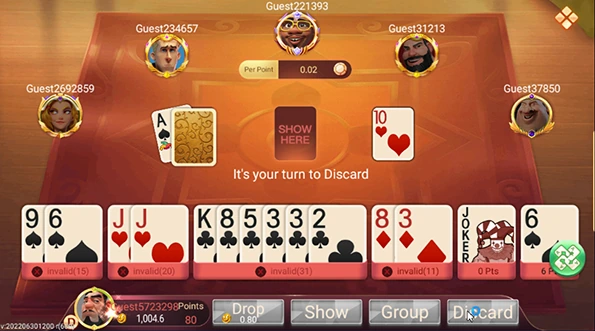
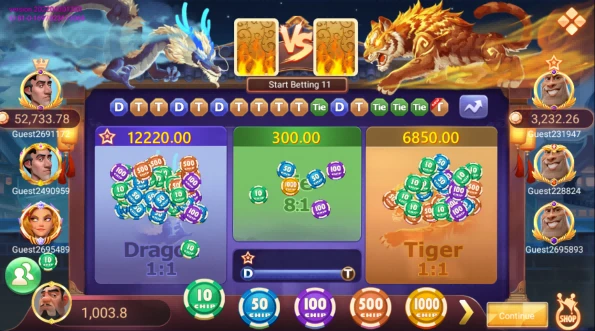
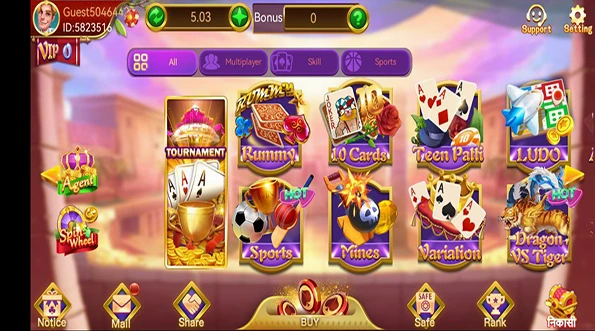
† Advertised claim with no published condition. Amounts and floors are copied from a listing page and can move at any time.
Table anatomy: points, pool and deals in one client
The core format is thirteen cards per player, a closed deck, an open discard pile and a meld requirement. A valid declaration needs two sequences, at least one without a joker. Points are counted on the cards still in hand, which is why the drop decision is made before the hand is complete instead of after.
Sequence rules are checked at declaration, outside play. Two sequences are the usual minimum, at least one pure, with sets covering the remainder. A joker can complete an impure sequence; it cannot replace the pure one. That single restriction decides most close hands.
The lobby is a tabbed list instead of a single queue: points tables, pool tables, deals and practice, usually filtered by entry band and seat count. The cashier sits one level above the tabs, which is why a deposit prompt can appear before a player has chosen a format.
- Pick a format: points, pool or deals sit behind separate tabs.
- Filter the band: entry bands narrow the list before a seat is chosen.
- Take a seat: the open-seat count is shown on the table card.
- Leave the cashier: funding is a separate surface from the table list.
The file record for this listing reads package com.ptccg.zn3633.jqthpmwv, version 6.8.7, 83.4 MB. The card above carries the evidence state for each field; a missing value is marked instead of guessed.
Reading an advertised credit claim: campaign credit and code expiry
The first thing the balance screen hides is the difference between cash and credit. A withdrawable balance and a promotional wallet are displayed together, often under a single total. The cashier reads only the first, and the second usually disappears on withdrawal instead of converting.
The category advertises credit through four recurring doors: binding a mobile number, a check-in streak, a tier rebate and refer-and-earn. Each has a practical condition attached, and no listing reviewed here publishes all four together.
KYC is the second gate after turnover. A PAN or Aadhaar check, a bank-name match and a live selfie are common. A mismatch between the registered name and the account holder is one of the most frequent reasons a withdrawal returns to “Under Review”.
Promo codes are campaign instruments. They carry an expiry, a redemption cap and often an eligibility rule that excludes existing accounts. The field accepts the string; the server decides whether it is still valid.
Reading the withdraw tab: VPA, IMPS and “Processing”
The cashier screen separates inbound funding from outbound payout. The outbound tab collects a UPI ID or bank details and displays a minimum; the inbound tab is what converts a game client into an online money game under Indian law. This page documents the interface without describing a route to use it.
Listings in this category commonly advertise a ₹100 minimum †. The floor is a listing claim, not a schedule this record could verify. It matters because a balance below the floor cannot be withdrawn at all, and promotional credit does not count toward it.
The status line is the only feedback the withdraw tab offers. It collapses several different back-office states into one word, usually “Processing”. A queued bank transfer, a turnover shortfall and a compliance review can all present identically for days.
- Turnover: check whether bonus credit still has an unmet multiple.
- Name match: compare the app profile, the KYC record and the bank account name.
- Device link: a second account on the same handset can freeze both balances.
- Rail status: IMPS and NEFT settle on different clocks.
The Yono/777 family: shared names, different builds
Lookalike builds copy the icon, the name and often the lobby screenshots. The package string and the certificate are what they cannot copy convincingly. A visual match is not an identity match, and a listing that relies on screenshots is not evidence.
There is no authoritative ranking of variants. What can be compared is the file record: who serves it, what package it declares and whether the signer has been seen elsewhere in the family. That comparison is more useful than a listicle.
APK file facts: what the download actually is
Signature continuity is what allows an in-place update. If a new file is signed with a different key, Android treats it as a different app and refuses the overwrite. The only route is to remove the old app, and with it any local state.